
I think the JCPOA will endure if Europe can insulate trade with Iran: Jim lobe/ Trump's rhetoric about re-imposing sanctions is hollow: Vincent Ferraro
Tehran (KNA): We have had an exclusive interview about What's coming up in 2019 with two political science professors.
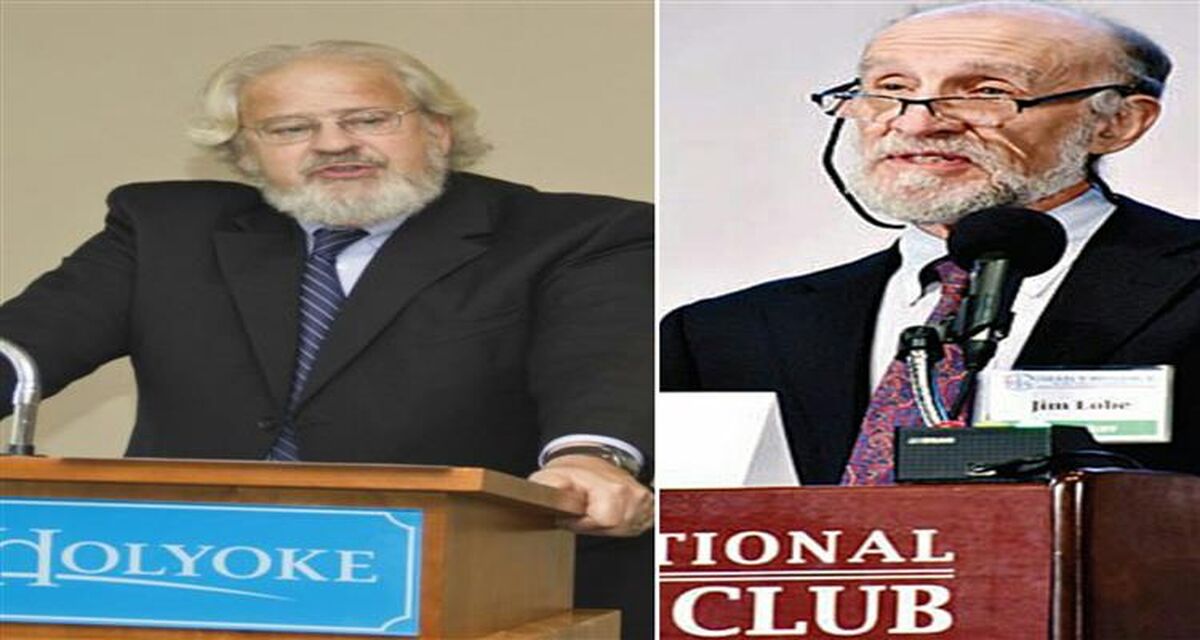
This year (I mean 2018) is wrapping up in less than a week and the new year is coming. In 2018, we have faced with many political and economic events, Such as Odd decisions by USA president , Donald Trump, his withdrawal from JCPOA and protest of yellow vests in France. We have had an interview about What's coming up in 2019 with two political science professors.
Jim Lobe (born January 4, 1949) is an American journalist and the Washington Bureau Chief of the international news agency Inter Press Service.
Professor Vincent Ferraro is the Ruth Lawson Professor of Politics at Mount Holyoke College, where he has been teaching since 1976. His research focuses on changes in international relations since the Cold War.
Q: I want to know your opinion about JCPOA in 2019. According to 2018 and US withdrawal from JCPOA and Trump's re-imposing sanctions, would it(JCPOA) be alive in next year (I mean 2019)?
Jim Lobe : I think the JCPOA will endure if Europe can insulate trade with Iran to some demonstrable extent and the Trump administration continues to grant waivers for the import of Iranian oil by key countries. Of course, if a military conflict breaks out involving Iran and a country with close ties to the Trump administration, such as Israel, Saudi Arabia, or the United Arab Emirates, the U.S. could well become involved, and that could kill the JCPOA altogether.
Vincent Ferraro : It is very difficult for me to answer your questions. President Trump has proven to be a highly erratic and capricious leader and his conception of foreign policy is non-existent. International relations should be played like a game of chess. President Trump is not playing chess nor is he even playing checkers. He is actually playing a game of tic-tac-toe. I suspect that the Europeans and Iran will try to keep the JCPOA alive since it remains a vital interest for both. President Trump's rhetoric about re-imposing sanctions is hollow: he has waived the sanctions for 8 countries which account for 80% of Iran's oil exports. Even if he ends the waivers, countries will find ways to skirt the sanctions since no state believes they are justified. And Trump lacks the ability or the legitimacy to enforce them.
Q : My second question is about the world. In 2018, many politicians and experts warned the world of a nuclear war in the US, Russia or china and etc. On the other hand, we faced with some historical negotiations such as USA and North Korea. What do you think about next year? Are you optimistic or pessimistic? Will any war happen in 2019 or not, the world will be guided to the way of peace?
Jim Lobe: I don't think there is any way to predict, particularly given the unpredictability of Trump himself and how he will react to what is likely to be growing pressure on him from the various investigations that will confront him under a Democratic House of Representatives. The unexpected withdrawal from Syria, the departure of key officials, notably Defense Sec. James Mattis and Brett McGurk, has underlined how unpredictable and isolated Trump has become. His closest formal advisers, notably National Security Adviser John Bolton and Secretary of State Mike Pompeo, will push him toward a more aggressive foreign policy, particularly against Iran, but it's not clear that they have much influence or how long they will remain in their positions. Too much is unknown.
Vincent Ferraro : By and large, I believe that the US should pull back its commitments abroad since they are generally counterproductive as well as unsustainable. But Trump's inability to fashion a coherent or deliberate pullback, I fear that there are far too many opportunities for misunderstandings. States may interpret US pullbacks as vacuums and try to exploit those opportunities. But Trump seems to believe that he can pull back US commitments without changing the configuration of power in the world--he has this naive view that the US is still as powerful as it was in 1991. So there are many places in the world (Ukraine, South China Sea, Taiwan, Venezuela, and the Middle East) where misunderstandings could lead to conflict. I do not believe that Trump is looking for conflict--he is too timid to initiate conflict. But he is also too limited strategically to discriminate between natural recalibrations of power from threatening recalibrations of power.