
Wave of grief sweeps Tehran as millions bid farewell to martyred leader
The farewell ceremony for Ayatollah Seyed Ali Khamenei, the martyred leader of the Islamic Revolution, began with the opening of gates 6, 8, and 11 on the eastern side and gates 9, 20, anThe farewell ceremony for Ayatollah Seyed Ali Khamenei, the martyred leader of the Islamic Revolution, began with the opening of gates 6, 8, and 11 on the eastern side and gates 9, 20, and 21 on the northern side of Tehran's Imam Khomeini Mosalla. d 21 on the northern side of Tehran's Imam Khomeini Mosalla.
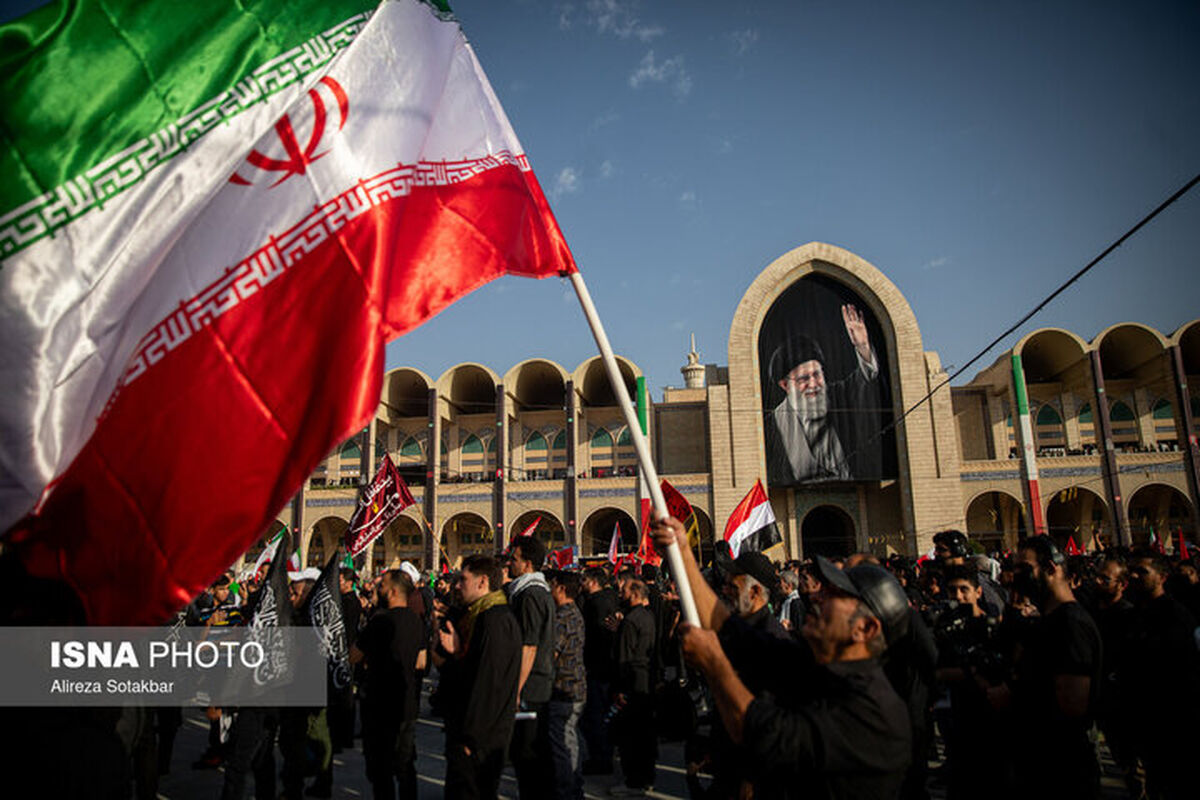
With the gates opening earlier than scheduled at 6 AM on Saturday, mourners who had been waiting around the Mosalla and its surrounding routes since Friday night entered the venue. Many had arrived late Friday night to participate in the ceremony.
Mourners at the Mosalla, holding raised flags, awaited the arrival of the sacred remains of the martyred leader. A notable presence of women was observed at the ceremony.
The official farewell ceremony began with the recitation of the Quran, followed by elegy recitation by Mehdi Rasouli, a eulogist of the Ahl al-Bayt, accompanied by a large crowd of mourners. At 7:30 AM, Iran's national anthem was played, with attendees joining in unison.
Participants, chanting "Ya Ibn Fatemeh, we await you" — a slogan that echoed at the Imam Khomeini Husseiniyah before the leader's arrival — awaited the placement of the sacred remains on the special podium. When the remains of the martyred leader and his family were placed, the Mosalla was filled with sorrow, and mourners expressed their devotion through salutations, elegies, and tears.
A banner placed near the podium bore the verse from Surah Saba, verse 46: "Say, I only advise you of one thing — that you stand for Allah, in pairs and singly."
The recitation of "Aza Azast Emrooz" resonated throughout the Mosalla, with thousands of devotees engaging in collective mourning and chest-beating. The atmosphere of the Mosalla and surrounding streets was engulfed in grief as attendees expressed their devotion through poetry and emotion.
Mourners from various regions, including Luristan, were seen mourning in the Mosalla grounds. Attendees, dressed in mourning attire for Imam Hussein and the martyrdom of the leader of the Islamic nation, carried Iranian flags, images of the martyred leader, the "clenched fist" symbol, and images of Ayatollah Seyed Mojtaba Khamenei. They chanted "Labbaik Ya Khamenei" and "All these armies have come for the love of the leader" to bid farewell to the late leader while pledging allegiance to the present leader.
During the ceremony, the red flag inscribed with "Ya Latharat al-Hussein" was raised over the dome of the Imam Khomeini Mosalla. Mourners from Kerman engaged in chest-beating, and caravans of mourners, who have been holding gatherings for over four months, entered the main grounds chanting "Ya Ahl al-Haram, the leader and standard-bearer has not come." They carried "Ya Latharat al-Hussein" flags and chanted "Haider, Haider."
"Aza Azast Emrooz, Rooz-e Azast Emrooz, Khamenei has become a martyr, he is with God today," was another slogan chanted by the mourners.
The elegy "Bayad Barkhast" was recited during the farewell ceremony at the Imam Khomeini Mosalla.
Wide-ranging measures have been implemented to serve the mourners, including misting systems to cool the Mosalla, reducing the temperature by up to five degrees. The water used in the misting system is supplied from fire department vehicles and is not connected to the municipal water network.
Mourning groups from various countries, including Georgia, also participated in the ceremony.
Images of the martyred leader were installed along the entire entrance route to the Mosalla, with a particularly large image displayed on one of the tall buildings adjacent to the venue.
Full order and stable security have been maintained at the ceremony through coordination of service, emergency, and security forces. In an atmosphere blending grief and devotion, the crowd of mourners in Tehran continues to grow by the moment.
The service, emergency, and security forces have ensured order and safety throughout the event, with mourners (men and women entering through separate routes) paying their respects to the remains in an organized manner.
Elderly attendees, some walking on foot and others in wheelchairs, could be seen among the crowds. Banners with messages such as "With a peaceful heart, O Master, he goes gracefully, Iran's soul departs," "The dignified oppressed one, I entrust you to God," "We have experienced grief, but we remain standing," and "Mount Damavand will remember your glory, the martyr of the February dawn of Karbala" were displayed along the mourners' route.
Some mourners, dressed in traditional mourning attire, had soiled their clothes with dust and mud. A booth titled "Signing the Covenant with the Martyred Leader" was met with great enthusiasm and became one of the most notable features of the farewell ceremony.
Three metro stations — Mosalla, Shahid Beheshti, and Mirza-ye Shirazi — were temporarily opened to facilitate public access.
Some 14,000 journalists from domestic media and 900 foreign media outlets are covering the farewell ceremony. Foreign journalists have expressed astonishment at the unprecedented turnout and the deep devotion of the people to the martyred leader.
Facilities for sending news, images, and live video and radio broadcasts are fully prepared, with domestic and foreign journalists stationed among the crowds to cover this monumental event.
The farewell ceremony will continue until Sunday evening, with people from across the country able to pay their respects. The funeral prayer will be held on Sunday morning. The sacred remains of the martyred leader will be paraded in Tehran on Monday, followed by ceremonies in Qom on Tuesday and in Mashhad on Thursday, where the leader will be buried at the shrine of Imam Reza. A special farewell ceremony will also be held in Najaf and Karbala on Wednesday.
On Friday, an official ceremony hosted by the heads of the three branches of government was held, with delegations from around the world attending and paying tribute to the martyred leader.
Ayatollah Seyed Ali Khamenei was martyred on February 28, the first day of the Ramadan War, during US and Zionist regime attacks.