
Avicenna, a shining star in the history of science and civilization
Tehran (KNA) : Iran marks National Doctors Day to commemorate the birth anniversary of renowned Persian physician and scientist Avicenna. But who is Avicenna? This article tries to explain some aspects of his character and his great scientific works
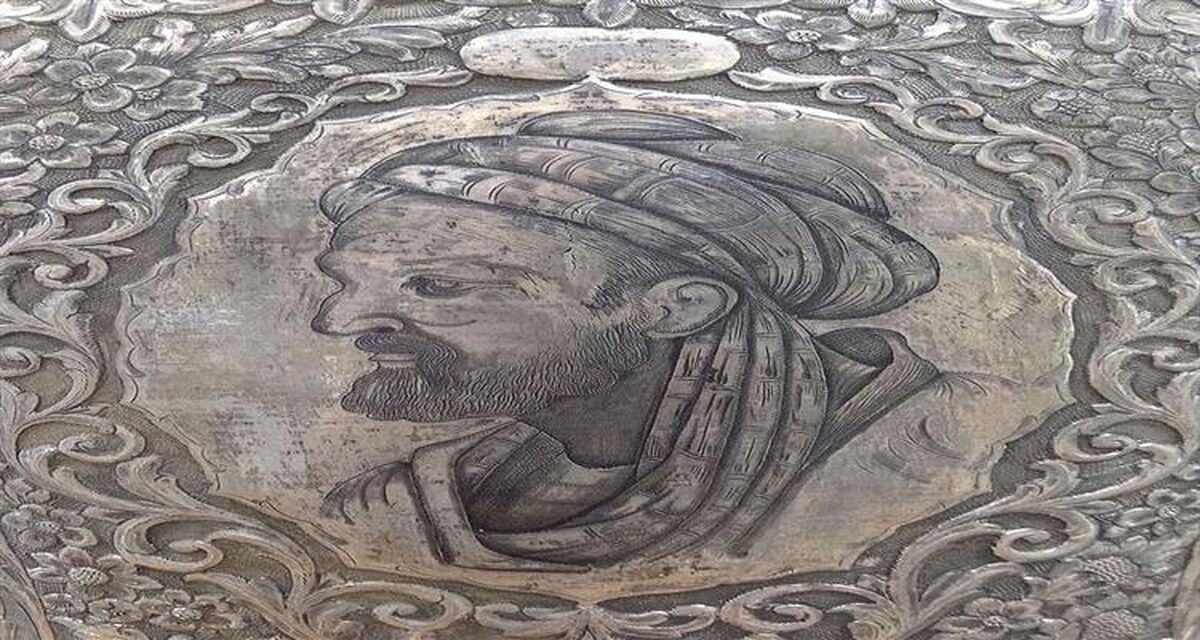
Avicenna (Ibni_ Sina) was born c. 980 in Afshana, a village near Bukhara (in present-day Uzbekistan). His mother, named Sitāra, was from Bukhara. his father, Abdullāh, was a respected Ismaili scholar.
According to his autobiography, Avicenna had memorised the entire Quran by the age of 10. He learned Indian arithmetic from an Indian greengrocer, Mahmoud Massahi and he began to learn more from a wandering scholar who gained a livelihood by curing the sick and teaching the young. He also studied Fiqh (Islamic jurisprudence) under the Sunni Hanafi scholar Ismail al-Zahid.
As a teenager, he was greatly troubled by the Metaphysics of Aristotle, which he could not understand until he read al-Farabi's commentary on the work. For the next year and a half, he studied philosophy, in which he encountered greater obstacles. In such moments of baffled inquiry, he would leave his books, perform the requisite ablutions, then go to the mosque, and continue in prayer till light broke on his difficulties. Deep into the night, he would continue his studies, and even in his dreams problems would pursue him and work out their solution. Forty times, it is said, he read through the Metaphysics of Aristotle, till the words were imprinted on his memory; but their meaning was hopelessly obscure, until one day they found illumination, from the little commentary by Farabi, which he bought at a bookstall for the small sum of three dirhams. So great was his joy at the discovery, made with the help of a work from which he had expected only mystery, that he hastened to return thanks to God, and bestowed alms upon the poor.
When Avicenna was 22 years old, he lost his father. He seems to have declined the offers of Mahmud of Ghazni, and proceeded westwards to Urgench in modern Turkmenistan, where the vizier, regarded as a friend of scholars, gave him a small monthly stipend. The pay was small, however, so Avicenna wandered from place to place through the districts of Nishapur and Merv to the borders of Khorasan, seeking an opening for his talents. Qabus, the generous ruler of Tabaristan, himself a poet and a scholar, with whom Avicenna had expected to find asylum, was on about that date (1012) starved to death by his troops who had revolted. Avicenna himself was at this time stricken by a severe illness. Finally, at Gorgan, near the Caspian Sea, he met with a friend, who bought a dwelling near his own house in which Avicenna lectured on logic and astronomy. Several of his treatises were written for this patron.
He continued his way and Sultan's solders pursued him town by town . After a long perilous journey, at the end, he reached Isfahan, receiving an honorable welcome from the prince of this city .
During the last years of his life , he began to study literary matters and philology, instigated, it is asserted, by criticisms on his style. On a similar occasion the disease returned. with difficulty he went to Hamadan, where, finding the disease gaining ground, he refused to keep up the regimen imposed, and resigned himself to his fate.
His friends advised him to slow down and take life moderately. He refused, however, stating that: "I prefer a short life with width to a narrow one with length. On his deathbed remorse seized him; he bestowed his goods on the poor, restored unjust gains, freed his slaves, and read through the Quran every three days until his death. He died in June 1037, in his fifty-eighth year, in the month of Ramadan and was buried in Hamadan, Iran.
Avicenna wrote extensively on early Islamic philosophy, especially the subjects logic, ethics, and metaphysics, including treatises named Logic and Metaphysics. Most of his works were written in Arabic - then the language of science in the Middle East - and some in Persian. Of linguistic significance even to this day are a few books that he wrote in nearly pure Persian language. Avicenna's commentaries on Aristotle often criticized the philosopher, encouraging a lively debate in the spirit of ijtihad.
Avicenna's Neoplatonic scheme of "emanations" became fundamental in the Kalam (school of theological discourse) in the 12th century.
The Canon of Medicine (Arabic: القانون في الطب) is an encyclopedia of medicine in five books compiled by Avicenna and completed in 1025. It presents an overview of the contemporary medical knowledge, which had been largely influenced by Galen.
The Canon of Medicine remained a medical authority for centuries. It set the standards for medicine in Medieval Europe and the Islamic world and was used as a standard medical textbook through the 18th century in Europe.] It is still used in Yunani medicine, a form of traditional medicine practiced in India
Because of these, William Osler , Canadian physician , described the Canon as "the most famous medical textbook ever written", noting that it remained "a medical bible for a longer time than any other work.
In modern Iran and other countries in the world , Avicenna is considered a national icon, and is often regarded as one of the greatest Persians to have ever lived. A monument was erected outside the Bukhara museum. The Avicenna Mausoleum and Museum in Hamadan was built in 1952. Bu-Ali Sina University in Hamadan (Iran), Avicenna Research Institute in Tehran (Iran), the ibn Sīnā Tajik State Medical University in Dushanbe, Ibn Sina Academy of Medieval Medicine and Sciences at Aligarh, India, Avicenna School in Karachi and Avicenna Medical College in Lahore, Pakistan. Ibne Sina Balkh Medical School in his native province of Balkh in Afghanistan, Ibni Sina Faculty Of Medicine of Ankara University Ankara, Turkey and Ibn Sina Integrated School in Marawi City (Philippines) are all named in his honour. His portrait hangs in the Hall of the Avicenna Faculty of Medicine in the University of Paris. There is also a crater on the Moon named Avicenna and a plant genus Avicennia.
In 1980, the Soviet Union, which then ruled his birthplace Bukhara, celebrated the thousandth anniversary of Avicenna's birth by circulating various commemorative stamps with artistic illustrations, and by erecting a bust of Avicenna based on anthropological research by Soviet scholars.