
The opinions of two Seismologists about Iran_Iraq earthquake
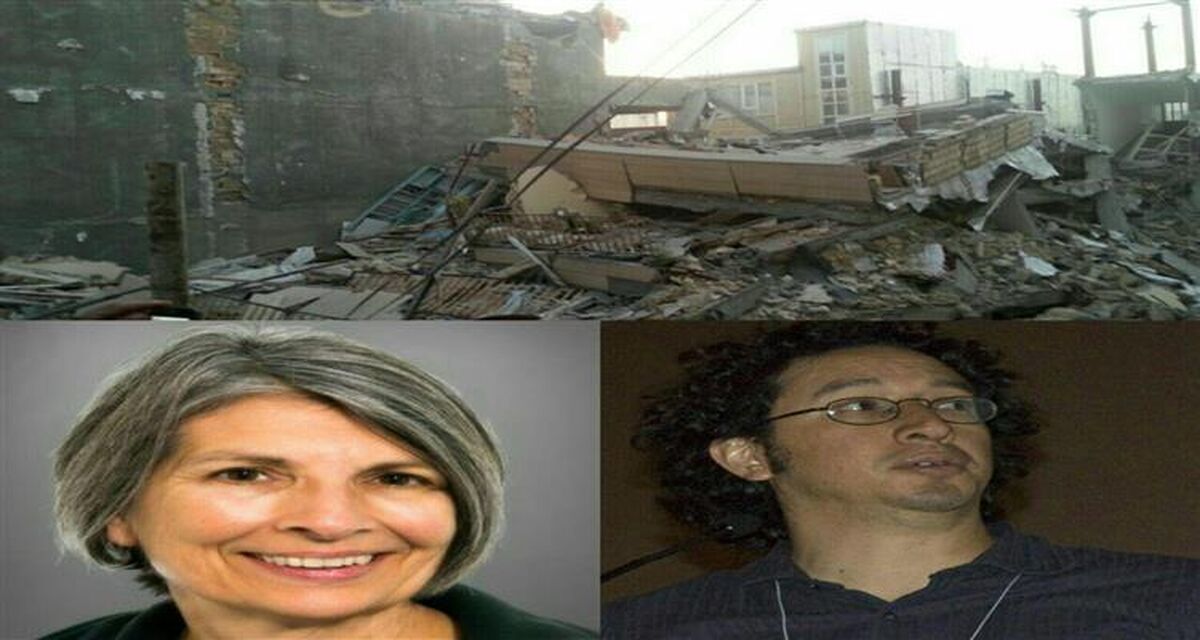
Tehran(KNA) : After Sunday's earthquake which its Death toll rises to 474, many scientists and Seismologists published their reports and analyses. We had an exclusive interview with 2 of them.
The epicenter of the quake, which occurred at around 09:18 pm local time on Sunday (0010 GMT on Monday), was 32 kilometers south of the Iraqi city of Halabja, in Iraqi Kurdistan, and just across the border from Iran, according to the United States Geological Survey (USGS).
So far, death toll from deadly earthquake in Iran's Kermanshah province rises to 530 . Most of them were Iranian and specially from Kermanshah.
I had an interview with 2 Seismologists about this quake. Joann M. Stock is a Professor of Geology and Geophysics in California Institute of Technology. She has worked a lot on global and regional plate tectonic questions, and geological and geophysical field studies related to plate boundary evolution.I focused on two questions in this interview. As the first question I asked that most of the people who killed were Iranian and not Iraqi. What is the cause of that?
she insisted that in this earthquake the most severe shaking was on the Iranian side of the border. If there is a difference in the size and construction of the buildings in the two countries, then even if the shaking is the same, more buildings might collapse in one place compared to the other. So then you might have more victims due to the buildings collapsing.
Then I focused on second the question. I asked Some people and even scientists in Iran believe that another earthquake will happen next week which is much stronger. Is it rumor or not? In general , can science predict earthquakes? Is it even possible?
We cannot predict earthquakes so we do not know what is going to happen next week. If somebody says they know it, then it is rumor coming from people who are not scientists. From statistics of past earthquakes, we do know that there are typically aftershocks, and the biggest aftershock can often be 1 magnitude unitlesser than the main shock. So there are likely to be a lot of smaller earthquakes that continue for a while.

I had an interview with another Seismologist. Jean Paul (Pablo) Ampuero is a Professor of Seismology in University of Paris. He has some works on earthquake dynamics, earthquake nucleation and dynamic rupture.
I repeat these two questions in his interview. For the first question he said that there are some clues we should consider about this. The number of fatalities depends on how many people were exposed to strong shaking in each country and the quality of the buildings they were in.
There was a foreshock (a smaller earthquake an hour before the big one, which would be felt over a smaller area), so maybe those who felt it were better prepared.
And for the second question he said we cannot predict earthquakes. We know that an earthquake always produces aftershocks, which in general are smaller: if the first one had magnitude M, the largest aftershock usually has magnitude M minus 1.2. The number of aftershocks decreases quickly with time: if you felt N aftershocks the first day, you will feel N more over the next 10 days, then again N over the next 100 days, etc. There is, however, a few percent chance that an aftershock grows bigger than the earthquake that caused it.