
Iranian Foreign Ministry Spokesman:
International Community Has Remained Silent in Face of Gaza Tragedy
Iranian Foreign Ministry Spokesman Esmaeil Baghaei said the international community has failed to take effective action to stop Israeli crimes in Gaza despite its humanitarian and legal responsibilities, citing continued US support for Israel.
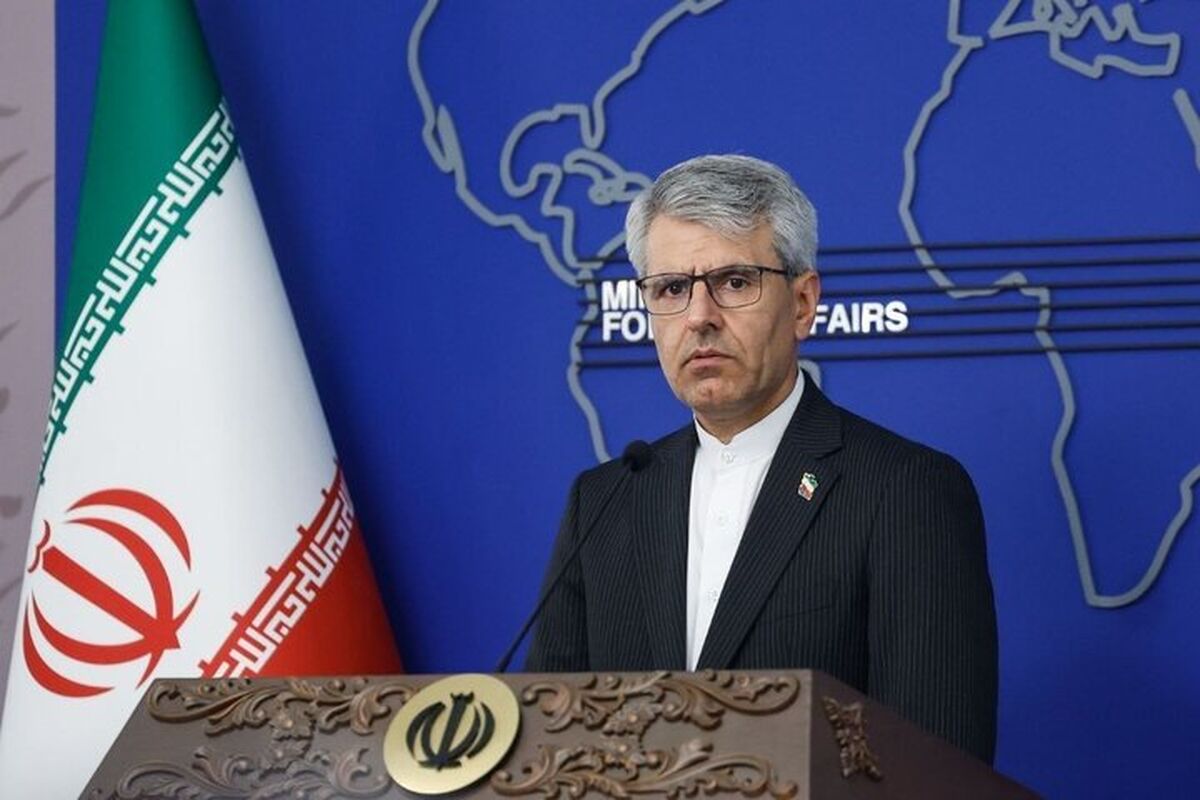
Iranian Foreign Ministry Spokesman Esmaeil Baghaei has criticized the international community's failure to take effective action to stop Israeli crimes in Gaza and the West Bank, despite its humanitarian and legal responsibilities.
Speaking at his weekly press conference on Monday, November 9, Baghaei extended his condolences over the deaths of several Iranian nationals in an incident in Van, Türkiye, and expressed appreciation for the sacrifices of those defending Iran's borders.
Referring to the ongoing humanitarian crisis in Gaza and the West Bank, Baghaei said the Zionist regime does not abide by agreements, while the people of Gaza continue to endure severe cold, rainfall and shortages of basic necessities.
He noted that only around 120 trucks carrying humanitarian aid enter Gaza each day.
Condemning the attacks carried out by the Zionist regime, Baghaei emphasized that the international community, despite its humanitarian and legal responsibilities, has so far failed to take effective action to stop these crimes due to continued US support for Israel.
US Must Decide on Iran's Two-Day Proposal
Responding to certain US positions regarding Iran's proposals, the Foreign Ministry spokesman said the American side expects Iran to abandon the rights of its people, while Tehran's demands for an end to the economic blockade and the war are reasonable.
Baghaei emphasized that the US attack on Iran, as well as the attacks carried out during negotiations, were illegal and irrational.
He also noted that the Islamabad Agreement had lasted no more than two weeks.
Describing Iran's two-day proposal as a demonstration of Tehran's goodwill, Baghaei said the region would witness positive developments over the next two days and that the proposal could pave the way for restoring security to the Strait of Hormuz.
The Foreign Ministry spokesman stressed that the United States must now make a decision.
He added that if Washington had correctly understood the message conveyed by the American people, it should take steps toward resolving the outstanding issues.
Iranian People's Resistance Influenced US Political Dynamics
Referring to the consequences of the US war against Iran and its impact on American public opinion, Baghaei said the heroic resistance and resilience of the Iranian people had brought about changes in the political and social climate of the United States.
Responding to analyses linking the Republicans' defeat in the congressional elections to the war against Iran, Baghaei said American officials' acknowledgment that the imposed war against Iran had generated public dissatisfaction demonstrated the conflict's far-reaching political and social consequences in the United States.
He added that without the resistance and resilience of the Iranian people, the US administration could have presented its imposed war as a victory to the American public.
"Therefore, the people of Iran are the victors on the battlefield," Baghaei emphasized.
The Foreign Ministry spokesman stressed that Iran makes no distinction between American political parties and factions, as the country has suffered from the policies of both sides over the past five to six decades.
He said what matters is whether the US administration understands the message of the American people and recognizes the consequences of following the policies of the Zionist regime.
Baghaei further emphasized that the illegal war and military aggression against Iran have affected not only the region but also the global economy and international norms, imposing extensive costs and consequences on the world.
So-Called "Iron Gate" Plan Aimed at Compensating for US Defeat
Referring to the so-called "Iron Gate" plan, Baghaei said the initiative appeared to have been proposed by hardline American factions seeking to compensate for previous defeats, particularly following the elections and the consequences of the unjust war against Iran.
Addressing the actions of the US Central Command (CENTCOM) following the attack on Minab, Baghaei said Iran had already witnessed the command's previous actions and conduct and would also witness its new measures.
However, he emphasized that such actions would not lead to a different outcome.
US Plans Must Not Alter Regional Geopolitics
Emphasizing Iran's opposition to any changes in the region's geopolitical landscape, the Foreign Ministry spokesman said Tehran had repeatedly stressed that such plans must not lead to geopolitical changes in the region.
"We have repeatedly stated that these plans must not result in changes to the region's geopolitics. Experience has shown that the US presence in the region has always been problematic, and we have conveyed our concerns in this regard to the Republic of Armenia," Baghaei said.
Referring to the proposed regional projects, he added that the project would not change the realities on the ground.
"Armenian forces are carrying out their duties, and we are closely monitoring developments. Wherever our country's interests and circumstances require, we will communicate our considerations," he stated.
Iran's Commitments Must Serve National Interests
The Foreign Ministry spokesman emphasized that Iran would only accept commitments that serve its national interests.
"Our demands are neither unusual nor unreasonable, and disregarding them could create problems for regional security," Baghaei said.
Referring to the mediation efforts of Pakistan and Qatar, he said both countries were pursuing their diplomatic initiatives and that Iran remained in contact and engaged with them.
Iran-India Relations Must Continue to Strengthen
Highlighting the importance of relations between Tehran and New Delhi, Baghaei said ties between Iran and India were highly significant.
He noted that the leaders of both countries had worked in recent years to strengthen bilateral relations through mechanisms such as BRICS and the Shanghai Cooperation Organization (SCO).
Referring to the historical and cultural ties between the two countries, Baghaei added that Iran and India share longstanding cultural affinities and commonalities.
He emphasized that these relations should be further strengthened through continued bilateral cooperation and engagement.
Bushehr Nuclear Power Plant Inspected Several Days Ago
Condemning US and Israeli attacks on Iran's nuclear facilities, the Foreign Ministry spokesman said the aggressors must be held accountable for violating international obligations and the framework of the Treaty on the Non-Proliferation of Nuclear Weapons (NPT), thereby disrupting Iran's cooperation with the International Atomic Energy Agency (IAEA).
"The party that must be held accountable is the aggressor that, by violating international commitments and the framework of the NPT, has created difficulties in the process of Iran's cooperation with the International Atomic Energy Agency," Baghaei said.
Referring to Iran's cooperation with the IAEA, he added that the agency had also failed to provide the necessary cooperation in this regard.
Nevertheless, Baghaei confirmed that an inspection of the Bushehr Nuclear Power Plant had been conducted several days earlier.
He further noted that Iran's representative remained in continuous contact with the International Atomic Energy Agency.
Disputes Between Iraqi Government and Kurdistan Region Must Be Resolved Through Dialogue
Expressing hope that disagreements between Iraq's central government and the Kurdistan Region would be resolved, Baghaei emphasized the importance of dialogue and adherence to the Iraqi Constitution.
"The Iraqi Constitution has clarified the matter in this regard, and in every country, the constitution serves as the basis for resolving disputes," he said.
Baghaei expressed hope that the outstanding issues would be settled through dialogue and interaction between the Iraqi parties.
Ending Attacks on Yemen and Resolving Disputes Through Dialogue Are Essential
Rejecting allegations of Iranian interference in Yemen's internal affairs, the Foreign Ministry spokesman said Iran's position was based on condemning violations of national sovereignty and calling for an end to military attacks.
"If interference means condemning violations of countries' sovereignty and calling for an end to attacks, then we, out of concern, are calling for an end to the attacks on Yemen and supporting the people of that country," Baghaei said.
Emphasizing that disagreements between Saudi Arabia and Yemen must be resolved through dialogue, he said an end to the attacks was a prerequisite for initiating such a process.
"It is regrettable to witness scenes of women and children being killed. According to the announced figures, more than 80 women and children lost their lives in the recent attack, and such a situation is unacceptable," he stated.
Baghaei emphasized that Iran had consistently advocated resolving the issue through dialogue and developing a roadmap to end the hostilities.
Message from American People Influenced Positions of War Supporters
Referring to public opposition to the war against Iran, the Foreign Ministry spokesman said the message conveyed by the American people had prompted those who initiated the war to adopt different positions.
Baghaei noted that opinion polls had also shown that the war had not been welcomed by either the American people or global public opinion.
He added that the positions adopted by newly elected officials on the issue would depend on the extent to which they considered the consequences of the war and the current circumstances in their decision-making.
Other Countries Should Avoid Actions That Further Complicate the Situation
Referring to more than 60 years of diplomatic relations between Iran and South Korea, Baghaei said the best contribution other countries could make would be to refrain from interfering in regional developments.
"The best help other countries can provide is to avoid interfering in developments in the region," he said.
Baghaei added that the Iranian people did not expect countries other than the United States, the Zionist regime and those that had supported the war to become involved in the conflict.
He emphasized that other countries should refrain from any actions or activities that could further complicate the situation.
Iran Is the Greatest Victim of Chemical Weapons
Referring to Iran's experience as one of the greatest victims of chemical weapons, the Foreign Ministry spokesman said such weapons had been supplied to Saddam Hussein's regime during the imposed war against Iran.
Baghaei emphasized that countries involved in supplying these weapons, including Germany, must be held accountable for their actions.
He stressed that Iran remained committed to its principles and values and would never engage in the use of weapons of mass destruction.
In contrast, he said the United States and the Zionist regime, which do not abide by international commitments and regulations in this field, must be held accountable for their conduct.
Pakistan's Mediation Plays an Important Role in Resolving Disputes
Emphasizing the deep and historical relations between Iran and Pakistan, the Foreign Ministry spokesman said ties between the two countries were longstanding and deeply rooted.
Baghaei recalled that Iran was the first country to recognize Pakistan, noting that Pakistan's selection as a mediator was a result of these longstanding connections and relations.
He said Pakistan was continuing its efforts to mediate and help resolve the disputes.
Although past experience had shown that the United States attached little importance to the role of mediators, Baghaei emphasized that Iran valued Pakistan's efforts.
He added that Tehran considered mediation an extremely important mechanism for resolving disagreements and disputes.
China Plays an Important Role in Regional Developments
Emphasizing the importance of Iran's longstanding strategic relations with China, the Foreign Ministry spokesman said Beijing held a special place in Tehran's foreign policy.
Baghaei noted that China, as a permanent member of the United Nations Security Council and a country with longstanding and significant relations with Iran, played an important role in Iran's foreign relations.
Referring to China's positive role in regional developments, he said Iran welcomed Beijing's participation in ensuring security in the Persian Gulf.
Baghaei added that the recent visit in this regard had been of considerable importance.
Decisions on Negotiations Are Made Within a Coordinated Framework
Referring to the decision-making process concerning negotiations, the Foreign Ministry spokesman said decisions were made based on the progress of negotiations and at various levels, ranging from deputy ministers to the foreign minister.
Baghaei emphasized that all these processes were conducted under the supervision of the Supreme National Security Council and within a coordinated and coherent framework.
Case of Three Pilots Remains Open as Iran Pursues Their Fate
Addressing the latest developments concerning three pilots, the Foreign Ministry spokesman said Iran's General Staff of the Armed Forces and the Qatari side were in direct contact over the matter.
Baghaei confirmed that efforts to determine their fate were continuing.
"So far, we have not received sufficient evidence or documentation confirming the martyrdom of these national heroes," he said.
"Therefore, the case remains open, and the Islamic Republic of Iran continues its efforts to clarify their fate."
Positions of Former European Officials Reflect Realities
Referring to statements made by certain former European officials regarding the positions of the United States and the Zionist regime, the Foreign Ministry spokesman said those remarks reflected the realities of the situation.
However, Baghaei emphasized that similar positions had been expected from current European officials.
Criticizing certain statements made by German officials, he said some of those remarks had unfortunately been inappropriate.
Baghaei expressed the expectation that current officials of European countries would take a position on the matter.