
How to Watch a Solar Eclipse
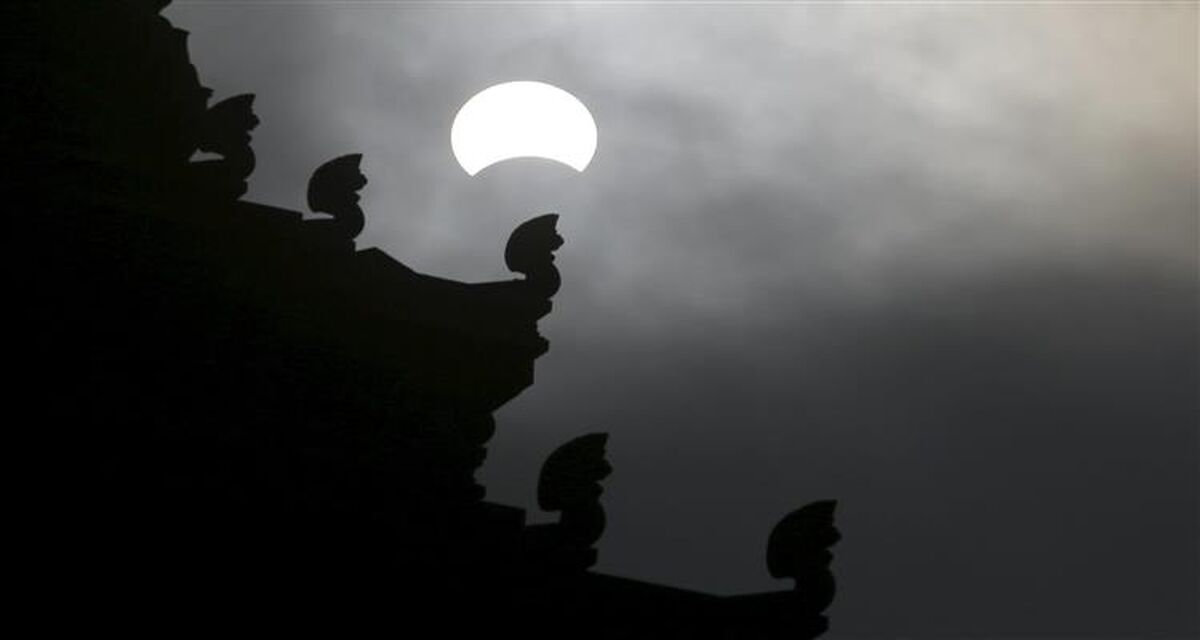
TEHRAN (KNA) : On Aug. 21, at midday, people who live in, or have ventured to, a band about 70 miles wide arcing from Oregon to South Carolina will get to see the moon pass directly in front of the sun. For a minute or two day will turn to night. If you are one of the lucky people who will get to see this total eclipse live and in-person, make sure you take advantage. But you will still see a partial eclipse if you are anywhere in North America. Here we’ll review what you need to know about eclipses, how to be safe during an eclipse and some fun experiments you can try during this rare event.
The moment when the moon passes completely in front of the sun, an event called "totality," will begin in Lincoln City at 10:16 a.m. PT and travel to the other side of the country, and exiting at Charleston, South Carolina at 2:48 p.m. ET. The entire journey takes about an hour and a half.
Even if you are not in the path of the total eclipse, a partial eclipse will be visible throughout the continental United States. The last remnants of the lunar shadow will finish passing over the country at 4:09 p.m.
If you're planning to catch the eclipse - either in totality or even partially - in person, you'll need a few things to view it safely. Even though an eclipse effectively turns day into night, never look directly at the sun.
Solar eclipses are especially dangerous. Not because of anything special about the light during the eclipse, but because the sudden changes in luminosity can cause retina damage before your eyes have a chance to adapt, or before you have an opportunity to look away.
So what should you use to watch the beauty safely? Many amateur eclipse-watchers may drag out a telescope, but in reality, telescopes are not ideal for eclipse-watching because of their narrow field of view. Binoculars however, can enhance the experience, especially if they have proper filters to protect your eyes.
The best part is that these glasses don't need to be expensive. Our colleagues at The Wirecutter, a New York Times company dedicated to testing and recommending the best products, suggest the Celestron Eclipsmart Power Viewers, which are made of paper and come in a two-pack along with a map.
A pinhole projector is another safe way of watching the eclipse, and you can make one yourself with two thin pieces of cardboard (or paper plates).
Here's how:
Eclipses are beautiful cosmic events, but they can also seriously damage your eyes if not viewed safely. We turned to Dr. Rick Fienberg from the American Astronomical Society to provide us with a lesson in eclipse safety and how to make sure you see as much as you can of this unique event.
DOS :
Do wear eclipse glasses. The only safe way to view the eclipse during its partial phases is to wear eclipse filters. We already suggested a few you should consider, but even if you don't go with those, glasses that meet the proper international safety standards should have a certification of ISO 12312-2.
Do bring binoculars to look at the eclipsed sun. But never look at the sun during its partial phases with plain-old binoculars. As we said earlier, you can get slide-on filters to keep your eyes safe.
DON'TS :
Don't look directly at the sun when any part of its bright face is still visible. Whether you are in the line of totality or outside of it, never look at the sun without proper solar filters during the partial phases of the eclipse.
Don't use sunglasses instead of eclipse glasses. Sunglasses DO NOT cut it. Properly certified eclipse glasses are 100,000 times darker than sunglasses, according to Dr. Fienberg, and they filter out the harmful ultraviolet and infrared radiation.
Don't look at the sun through a telescope or binoculars while wearing solar eclipse glasses. This is extremely dangerous, according to Dr. Fienberg, because the concentrated sunlight coming through the optics of the telescope or binoculars could burn through the filter and damage your eyes. Only look at the sun during the partial phases of the eclipse with binocular or telescopes that have specially designed solar filters.
Don't use a welder's mask. Most likely a typical welder's mask that a person might have in his house is not strong enough to be used during an eclipse. Only masks that have filters of shade 14 or 15 are viable. Dr. Fienberg says that you're much better off using a pair of eclipse glasses.