
Trump lays out new iran strategy
Tehran (KNA) - President Donald Trump on Friday unveiled a tough new policy toward the "rogue regime in Iran," prior to declaring that the nuclear deal reached by the Obama administration was no longer in US interests, though he was expected to stop short of ripping it up.
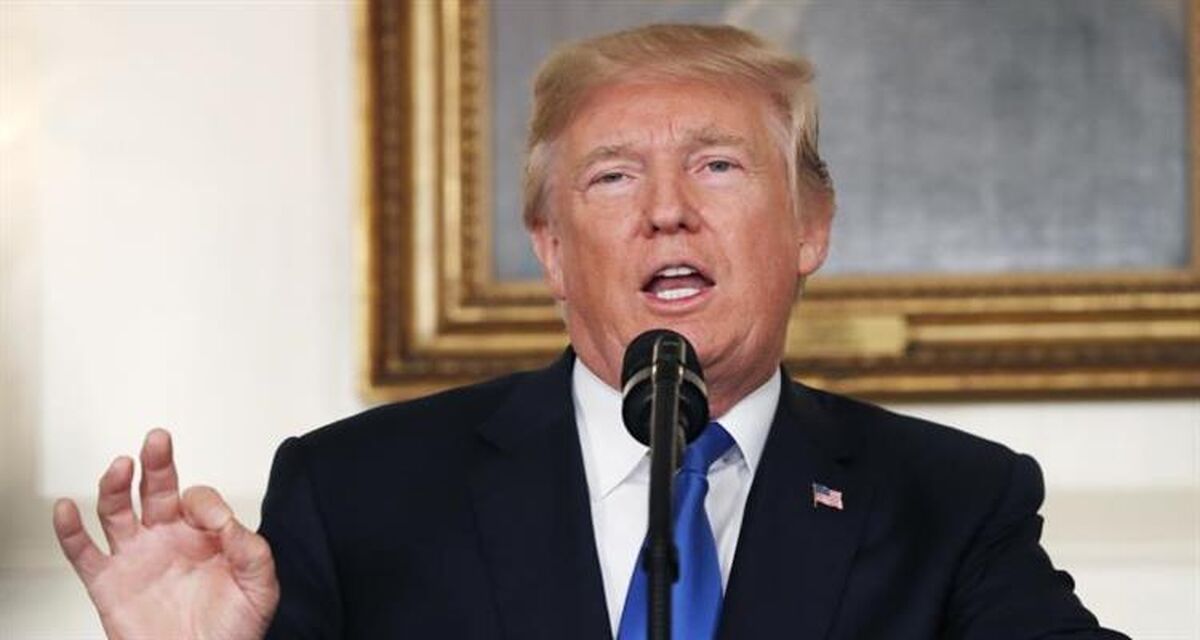
"As I have said many times, the Iran deal was one of the worst and most one-sided transactions the United States has ever entered into," Trump said in a major speech at the White House laying out the sharp turn in US Iran policy. Trump accused Iran of committing "multiple violations of the agreement," despite the fact that the International Atomic Energy Agency, America's European allies and even his own government say that Tehran is complying with the 2015 deal reached by former President Barack Obama and major world powers. He said that Iran had "failed to meet our expectations in its operations of advanced centrifuges," and "intimidated" international inspectors into not using their full authority. He also accused the Obama administration of lifting sanctions on Iran under the terms of the deal at a moment when the Iranian clerical regime was about to collapse, an assessment that contradicts the views of many experts. The President announced that he would no longer make regular certifications that the lifting of sanctions under the deal was in the US interests. "We cannot and will not make this certification. We will not continue down a path whose predictable conclusion is more violence, more terror and the very real threat of Iran's nuclear breakout," he said. "I am directing my administration to work closely with Congress and our allies to address the deal's many serious flaws so that the Iranian regime can never threaten the world with nuclear weapons." He said the flaws of the agreement included "sunset" provisions under which limits on Iran's nuclear program will begin to expire. Proponents of the deal dispute that. The President warned that the deal was plagued by "insufficient enforcement" and near total silence on the missile program. And he had a warning that if he did not get the changes he wanted, he would walk away from the deal.
"In the event we are not able to reach a solution working with Congress and our allies, then the agreement will be terminated. It is under continuous review and our participation can be canceled by me as President at any time."
"History has shown that the longer we ignore a threat, the more dangerous that threat becomes," Trump said, opening a speech on his new approach at the White House by recalling the repression of the Iranian revolution in 1979, and recalling terror attacks by Iranian proxies against the United States, including the 1983 bombing of a barracks in Beirut that killed 241 US Marines."The regime's two favorite chants are 'Death to America' and 'Death to Israel,'" Trump said."The Iranian dictatorship's aggression continues to this day," Trump said, branding the Tehran government a "fanatical regime" that sponsors terrorism and deploys missiles that threaten US troops and allies.Trump was expected to "decertify" Iran's compliance in the nuclear pact, but that doesn't amount to ripping up the accord, as he promised to do as a candidate.Instead, Trump will foist the agreement upon Congress, which now has 60 days to decide whether to re-impose sanctions that would likely cause Iran to walk away from the deal.Republicans and Democrats alike -- who also face upcoming battles over taxes, immigration and health care -- have shown few signs they're willing to take up another divisive issue.If lawmakers decide to impose new punitive economic sanctions on Iran, the deal will likely fall apart. Instead, the Trump administration wants members of Congress to adopt new measures that would keep the deal intact, while spelling out parameters by which the US would impose new sanctions should Iran violate its agreements.In his midday speech, Trump is also expected to detail a more combative approach to Iran's ballistic missile program and its support for terrorist networks, including the possibility of new economic sanctions on individuals and entities associated with the Iranian Revolutionary Guard Corps, which provides support for a number of militant groups, including Hezbollah.The President hopes to de-emphasize the nuclear agreement in US dealings with Iran, instead laying out a plan that "focuses on neutralizing the government of Iran's destabilizing influence and constraining its aggression, particularly its support for terrorism and militants," according to a summary of his approach distributed by the White House earlier Friday morning. Iran's destabilizing efforts in the region extend from Yemen to Syria to Saudi Arabia.Trump has been weighing his Iran decision for weeks and has faced intense pressure from European allies to maintain the US commitment to the accord. His national security advisers have encouraged him to avoid completely withdrawing from the agreement, which was signed by the US along with Britain, France, Germany, Russia, China, the European Union and Iran in 2015.A complete removal of the United States from the nuclear deal would isolate the United States and provide an opening for Iran to rethink its own commitments on reducing nuclear stockpiles, some of Trump's advisers and foreign counterparts warned.Source:CNN