
The woman who’s promised to care to care for 1,252 chkildren
Tehran ( KNA) - More than a thousand children are counting on Nora Sándigo to become their guardian if their undocumented parents are deported. How many of those promises will she now have to keep?
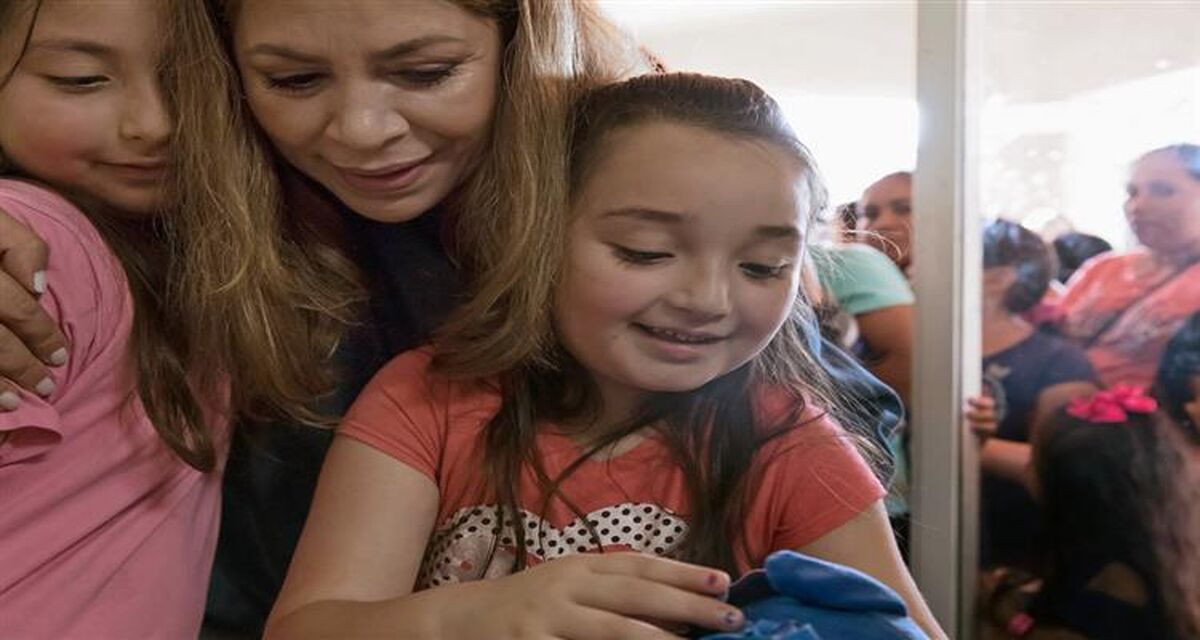
Because she didn't know what to tell her children, she tried not to tell them anything. When they asked where their father was, she gave flimsy excuses: Yes, he came home last night, but he left while you were still asleep. He's working late, he's working early, he just stepped out, he'll be back soon. "You just missed him," she found herself repeating.
The strategy worked, for a few days at least, with the youngest three. They were all under 5 and were used to the world going about its strange business without them. But then there was Kelly. She was 8 and sharp-eyed, a good student who preferred English to Spanish and wanted to someday be a doctor, or maybe a gymnast, and who had watched a presidential candidate on television say he wanted to send people back to Mexico, where both her parents grew up.
Kelly came home from school one day in October last year and demanded to know where her father was. Because his construction job started so early in the morning, Javier was usually the first home. That was part of how he and Kelly's mother, T., fell in love.
They boarded in the same house more than a decade ago, when she was 19 and freshly arrived in South Florida, having followed her sister from their small village in southern Mexico.
T., who is being identified by her first initial to shield her identity, quit school after sixth grade. She helped her parents plant corn and beans but dreamed of something better for herself and her infant son; she decided to leave him in her mother's care and support him from afar.
Javier was from the same region, and because he finished work early, he cooked for her while she was still out in the Florida sun. The food was delicious and tasted like home.
Soon they were a couple, and then Kelly was born, and her father, who fainted with anxiety in the birthing room, adored her, and she adored him back."He's late from work," T. told her daughter.
But Kelly wasn't having it. Before heading to school that morning, she saw uniformed men come to the door and ask her mother for her father's passport; she heard her mother on the
phone, asking what had happened, what to do. "Don't lie to me," Kelly said, and started to cry. "Where did they take him? What did he do?"By now T. knew. One of her first phone calls was to an immigrant advocate and former refugee named Nora Sándigo, who, in this poor area south of Miami, was the most powerful person in many people's worlds: She knew lawyers, county commissioners, even members of Congress. After T. called her, Sándigo quickly discovered that Javier had been detained by the Department of Homeland Security. T. didn't tell Kelly the details she had learned from Sándigo, or from Javier, when he was finally able to make a brief call. That they arrested him just a few yards away from their home, as he stood waiting for his ride to work.
That now he was on the edge of the Everglades, in a gray-and-tan detention center adjacent to a state prison, a half-hour's drive away, a distance that, for T., had suddenly become unbridgeable. "He was arrested," she told Kelly, simply. "We have no papers to be here, like you do.""Will they take me, too?" Kelly asked. She didn't know what papers her mother was talking about, what this thing was that she had and her parents didn't.T. didn't tell her daughter the other reason she called Sándigo. Across South Florida, T. knew, undocumented parents of citizen children were preparing for possible deportation by signing power-of-attorney forms that allowed Sándigo to step in should their own parenthood be interrupted by a surprise visit from Immigration and Customs Enforcement, or ICE. If they were taken away, at least Norita, as they called her, could provide stability while the family sorted out what to do; she could also sign forms on their children's behalf at school, or at the hospital, or in federal court.
Sándigo's responsibilities extended to many hundreds of children, and were growing all the time. Parents, some of whom had never met her in person, were desperate for any solution. Her qualifications were simple. She was compassionate.
She was willing. And, like their children, she was a United States citizen.For years, T. never felt the need for such an extreme contingency plan. Now she was thinking of adding her own children to Sándigo's list. "Imagine if they detained me too," she said after Javier was gone. She couldn't envision taking her American children with her to Mexico, where she "wouldn't be able to give them education, shoes, clothes," and where they would be separated from their friends and lives and ambitions, from the only home they had ever known. But what would happen if they stayed behind, with no parents left to care for them?There's a common misconception that having a citizen child - a so-called anchor baby - allows undocumented parents to gain legal status in the United States. In fact, parents of citizen children are deported annually by the tens of thousands, according to ICE's own reports to Congress. Randy Capps, a demographer with the Migration Policy Institute, estimates that as many as a quarter of the people deported from the United States interior (who are counted separately from those deported at a border) are the parents of American children. Though immigration law prioritizes family connections, including legal status for the family members of Americans who petition on their behalf, children are the exception. They cannot, by law, petition for anyone until they turn 21 - by which time, of course, they won't need their parents nearly as much.
Source: New York Times