
Nasir al-Din Tusi, a great man with a beautiful mind
Tehran(KNA): Today is khajeh Nasir al-Din's anniversary day. A great Iranian and Muslim philosopher, scholar and scientist who played an important role in the progression of science in the world.
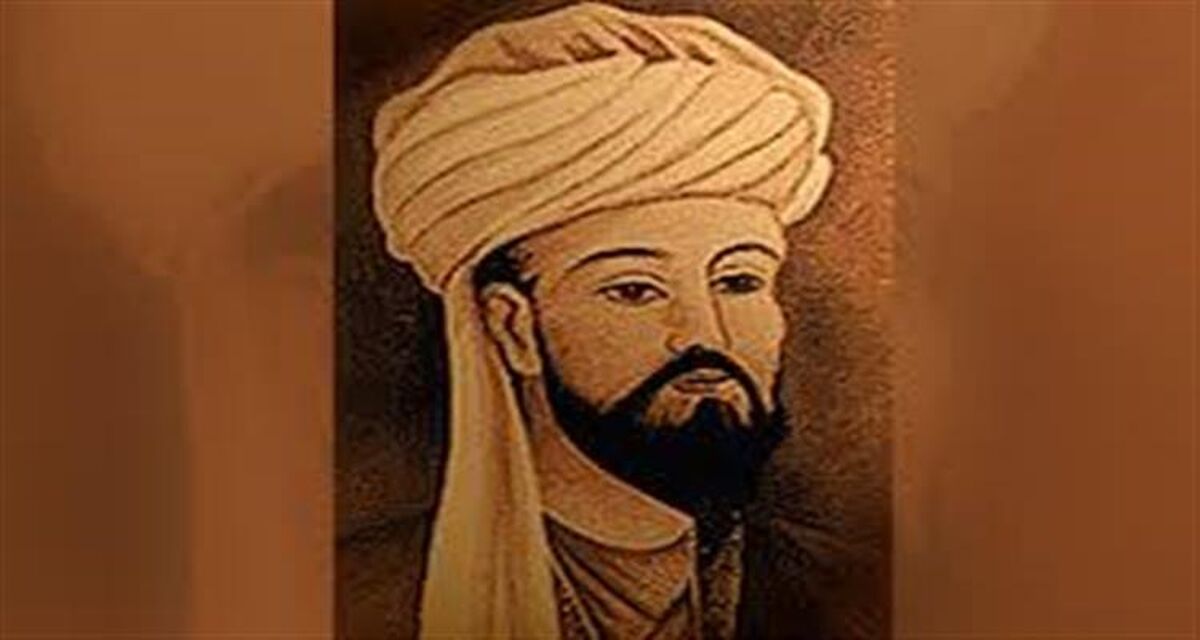
Nasir al-Din Tusi was the most celebrated scholar of the 13th century in Islamic lands. Thomas Aquinas and Roger Bacon were his contemporaries in the West.
The ensemble of Tusi's writings amounts to approximately 165 titles on astronomy, ethics, history, jurisprudence, logic, mathematics, medicine, philosophy, theology, poetry and the popular sciences.
Nasir al-Din Tusi was born in the city of Tus in medieval Khorasan (northeastern Iran) in the year 1201 and began his studies at an early age. In Hamadan and Tus he studied the Quran, hadith, logic, philosophy, mathematics, medicine and astronomy.
In 1214, when al-Tusi was 13 years old, Genghis Khan, who was the leader of the Mongols, turned away from his conquests in China and began his rapid advance towards the west. It would not be too long before al-Tusi would see the effects of these conquests on his own regions, but before that happened he was able to study more advanced topics.
From Tus, al-Tusi went to Nishapur which is 75 km west of Tus. While in Nishapur al-Tusi began to acquire a reputation as an outstanding scholar and became well known throughout the area.
When Nasir al-Din was in Nishapur, the Moguls launched their first conquest under the leadership of Genghis Khan, and brought about a severe bloodshed. Muhammad II of Khwarezm was defeated by the Moguls and then all resistance failed. All cities fell one after another and people fled from cities and refuged to farther cities or firmer forts. The only resistance force against the Mogul conquest were Isma'ili forts. While cities of Khorasan and Nishapur were fully seized by the Moguls, the Isma'ili forts resisted for many years and did not surrender.
At that time, Muhtasham Nasir al-Din 'Abd al-Rahim b. Abi Mansur, who lived in Qohestan, was appointed by the Isma'ili leader, 'Ala' al-Din Muhammad, as the commander of the Isma'ili forts in Khorasan. Nasir al-Din was a scholar of his time and had a particular respect for scholars. He heard about the scholarly significance of Nasir al-Din al-Tusi and, thus, invited him to Qohestan. Nasir al-Din al-Tusi, who was displaced after the Mogul conquest, seized the opportunity and went to Qohestan.

In this period, Nasir al-Din al-Tusi translated a book by Abu 'Ali Miskawayh al-Razi into Farsi, he added comments on the book and called it Akhlaq-i Nasiri (Nasiri ethics) after the name of Muhtasham Nasir al-Din. After a while, he wrote a book concerning astronomy and called it al-Risala al-Mu'iniyya after Mu'in al-Din b. Muhtasham Nasir al-Din.
The leader of Isma'ilis, 'Ala' al-Din Muhammad, heard about Nasir al-Din al-Tusi's great scholarly service for Muhtasham Nasir al-Din, and thus, he asked Nasir al-Din al-Tusi to join him. He had to accept the request and, thus, he and Muhtasham Nasir al-Din went to him in the Maymun Duz Fort. He was warmly welcomed by the leader of Isma'ilis. After a while, the leader was killed by one of his guards, and his son, Rukn al-Din Khwarezm Shah succeeded him. Nasir al-Din al-Tusi stayed in the Alamut Fort until Rukn al-Din surrendered to the Moguls in their second conquest.
Some historians believe that Nasir al-Din did not stay in Isma'ili forts at his own will; rather he was forced to do so. Some people, such as Aqsara'i in Musamara al-akhbar maintain that Nasir al-Din was a prime minister for the Isma'ili government. He was so admired there that he was called the "Master of the Universe". Thus, the story of force and prison is ruled out by this account. People who claim that Nasir al-Din was forced to join the Isma'ilis and was imprisoned in their forts appeal to his complaints at the end of his Sharh al-isharat about his life and time.
The second Mogul conquest under the commandership of Hulagu Khan was stronger than the first, and thus, the Isma'ili forts which were resistant to Genghis Khan were conquered by Hulagu Khan. Rukn al-Din found that it was ineffective to resist anymore, and after consulting his close advisors and prominent figures of his government, he surrendered himself to Hulagu Khan. Except Nasir al-Din al-Tusi and two other physicians, everyone was killed by Hulagu Khan, including Rukn al-Din. Nasir al-Din al-Tusi was kept alive because Hulagu Khan was aware of his scholarly and intellectual significance.
Nasir al-Din al-Tusi had to join Hulagu Khan. Thus, he decided to benefit from his place to protect the Islamic heritage which was on the verge of destruction. His plans were so effective that a government which had launched attacks to eradicate Islam converted to Islam at the end, and the successors of Genghis Khan and Hulagu Khan turned into Muslim kings.
It seems that for Nasir al-Din al-Tusi, it was a priority to save lives of scholars and protect manuscripts of libraries. Since it was not possible for people or the government to resist the Mogul conquest, Nasir al-Din al-Tusi founded Maragheh Observatory so that many scholars of the time could reside there and be immune from murder. He also made a great deal of effort to collect and protect a lot of manuscripts.
Nasir al-Din al-Tusi's character is distinguished by his ability to control Mongol warriors, protect the work of Muslim scholars, and advance the cause of an Islamic civilization. He is said to be Ibn Sina's peer in scholarship, except that Ibn Sina mastered medicine the most, and al-Tusi mastered mathematics the most.
His scholarly contributions include his defense of the Islamic Peripatetic philosophy and the transformation of the Shiite kalam into a philosophical kalam. All subsequent works of kalam were influenced by his Tajrid al-i'tiqad.
Just like Ibn Sina, Nasir al-Din al-Tusi was involved in politics, but against his own will. Hulagu Khan's awareness of Nasir al-Din al-Tusi's scholarly position led to the Khan's decision not to kill him in the Isma'ili fort and to keep him as his companion.
The conversion of Mongol kings to Islam was inspired by Nasir al-Din al-Tusi's presence at their palace, and a special event in his life was his accompaniment of Hulagu Khan in the Conquest of Baghdad. Today, some Sunni scholars condemn the fall of the Sunni government in Baghdad and blame Nasir al-Din al-Tusi for his accompaniment of the Khan in the conquest.

Tusi's major works are the following:
(1) Astronomy: al-Tadhkira fi 'ilm al-hay'a; Zij Ilkhani; Risala-yi Mu'iniyya and its commentary.
(2) Ethics: Gushayish-nama; Akhlaq-i Muhtashami; Akhlaq-i Nasiri, 'Deliberation 22' in Rawda-yi taslim and a Persian translation of Ibn Muqaffa''s al-Adab al-wajiz.
(3) History: Fath-i Baghdad which appears as an appendix to Tarikh-i Jahan-gushay of Juwayni (London, 1912-27), vol. 3, pp. 280-92.
(4) Jurisprudence: Jawahir al-fara'id.
(5) Logic: Asas al-iqtibas.
(6) Mathematics: Revision of Ptolemy's Almagest; the epistles of Theodosius, Hypsicles, Autolucus, Aristarchus, Archimedes, Menelaus, Thabit b. Qurra and Banu Musa.
(7) Medicine: Ta'liqa bar qunun-i Ibn Sina and his correspondences with Qutb al-Din Shirazi and Katiban Qazwini.
(8) Philosophy: refutation of al-Shahrastani in Musara'at al-musari'; his commentary on Ibn Sina's al-Isharat wa'l-tanbihat which took him almost 20 years to complete; his autobiography Sayr wa suluk; Rawda-yi taslim and Tawalla wa tabarra.
(9) Theology: Aghaz wa anjam; Risala fi al-imama and Talkhis al-muhassal and (10) Poetry: Mi'yar al-ash'ar.
Al-Ṭūsī's Tajrīd ("Catharsis") is a highly esteemed treatise on Shīʾite theology. He made important contributions to many branches of Islamic learning, and under his direction Marāgheh sparked a revival of Islamic mathematics, astronomy, philosophy, and theology. In the East, al-Ṭūsī is an example par excellence of the ḥakīm, or wise man.