Professor Ferraro explains four Trump's options on Iran nuclear deal: negotiation, war, sanction or doing nothing?
Tehran(KNA) : Tehran(KNA): We had an exclusive interview with Professor Ferraro about Trump’s decision about Iran’s nuclear treaty and future of JCPOA.
Donald Trump has said he will announce at 2pm local time (6pm GMT) on Tuesday whether or not to pull the US out of the Iran nuclear deal, a decision that will likely reverberate around the world.
Many experts believe at last Iran's nuclear treaty would be violated by Trump. We had an interview about this issue with a political science professor, Vincent Ferraro.
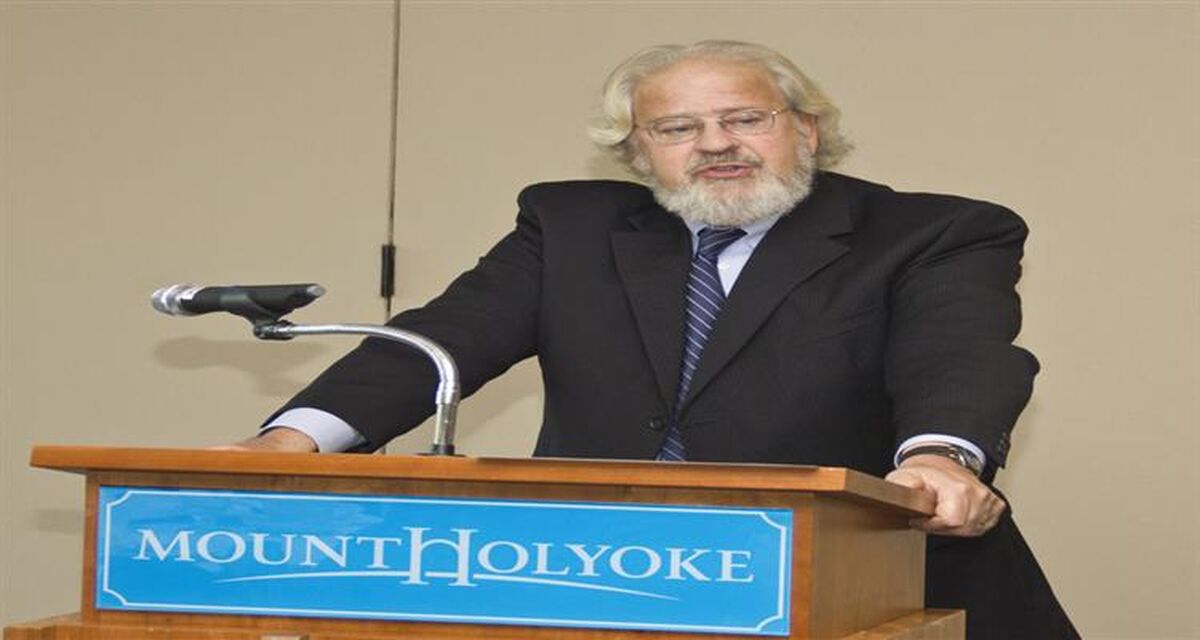
Professor Vincent Ferraro is the Ruth Lawson Professor of Politics at Mount Holyoke College, where he has been teaching since 1976. His research focuses on changes in international relations since the Cold War, and he teaches courses on World Politics, American Foreign Policy and International Political Economy. Professor Ferraro previously served as the academic consultant to the United Nations Association of the United States and to the United Nations Development Program.
We asked Professor Ferraro What is legal reaction of Iran and the US to the possible violation by Trump and his government?
Professor Ferraro asserted in his interview that he is not certain that Donald Trump will follow through on his threat. He has issued several similar threats in the past and has changed his position when his deadline arrived (such as his position on aluminum and steel tariffs against some European states). But if he does, then these are his options:
Then the question is what will Iran do? The other parties will likely maintain current positions and if they openly support the continuation of the agreement then Iran will continue to comply. That situation might satisfy Mr. Trump's domestic political base, but will have no practical effect on the status quo.
Iran says that it will not renegotiate the agreement. According to the BBC: "In remarks carried live on Iranian state television on Sunday, President Rouhani said: "If America leaves the nuclear deal, this will entail historic regret for it." He warned Iran had "a plan to counter any decision Trump may take and we will confront it".
For the Europeans a safe option. It allows them to agree with the US without serious consequences. That proposal would take years. Even if Iran refuses to negotiate, as long as no new sanctions are imposed, the status quo would rest in limbo.
National Public Radio describes the very unusual sanctions framework for the JCPOA: "If U.S. officials believe Iran is violating the deal, they would bring the allegation to the Security Council. At that point, sanctions would be imposed automatically - the first unusual twist in the deal. If members of the security council - Russia, China or others - rise to Iran's defense, they can block the new sanctions only by passing a new resolution….That could be stopped by a U.S. veto. The U.S. is one of five permanent council members - including Great Britain, France, Russia and China - with veto power….In other words, instead of making sanctions vulnerable to a veto by the five permanent Security Council members, the deal flips that around, and gives the U.S. (or others) power to stop any attempt to block the imposition of sanctions."
What will the US do? That likely depends on the British, French, and the Germans who oppose breaking the agreement. Russia and China will not wish to reimpose sanctions and will probably ignore any call to do so. Neither do the Europeans, but the US is leaning on them. Mr Trump may dangle trade deals in front of them to secure their cooperation. Such a move would be very tempting for the Germans and the British, but the Swiss and the Italians have already re-established strong economic links with Iran, so the issue would be Europe-wide discussion (Switzerland is not part of the European Union. Reimposing the sanctions will take a long time and much depends on which ones would be reimposed and how strictly they will be enforced.
There will also be collateral damage to such a move as the North Korea negotiations would be affected. The credibility of the US would be damaged and the most significant rule of the liberal world order-the Non-Proliferation Regime-would come under serious stress.
This is the spookiest alternative. It already been foreshadowed by Israeli actions in Syria which have sharply escalated military conflict with Iranian units. Additionally, Netanyahu's speech about Iranian duplicity on nuclear weapons, although consisting largely of old and already-known news, suggests the very hard line of Israel toward the agreement. Furthermore, most of Mr. Trump's advisers-Bolton, Pompeo, Guiliani-are fiercely opposed to the agreement and have replaced the advisers, McMaster and TIllerson, who favored keeping the agreement.
The objective would be to create some sort of confrontation with Iran which would arouse nationalist sentiment in the US to support military action in support of an Israeli attack on Iran. It is unclear how closely the US public has been following the Iranian issue, but there remains significant anti-Iranian sentiment in the US from the hostage crisis which persisted between 1979 and 1981. But the Iraq and Afghanistan Wars have taken place in the mean-time and there may not be much support for another war in the Middle East. But a nationalist inspired crisis would certainly divert attention away from the Russian meddling/Stormy Daniels stories currently dominating the media.
But a war with Iran suffers from the same problem with scrapping the JCPOA: there is no vision of what comes after either event. Getting rid of something bad is only the right move when it can be replaced by something better. I personally do not believe the JCPOA is not a "bad" agreement-it has accomplished its very crafted objectives and given the world plenty of time to work out a better relationship with Iran. That the world has not taken advantage of that opportunity is not a failure of the agreement.