
ISIL is in a very uncertain transitional period/ A sub-Saharan country or places like Somalia could be their next territory: Professor Wuthrich
Tehran(KNA) : Tehran(KNA) : We have had an exclusive interview with a political science professor about ISIL and their movements at the present time.
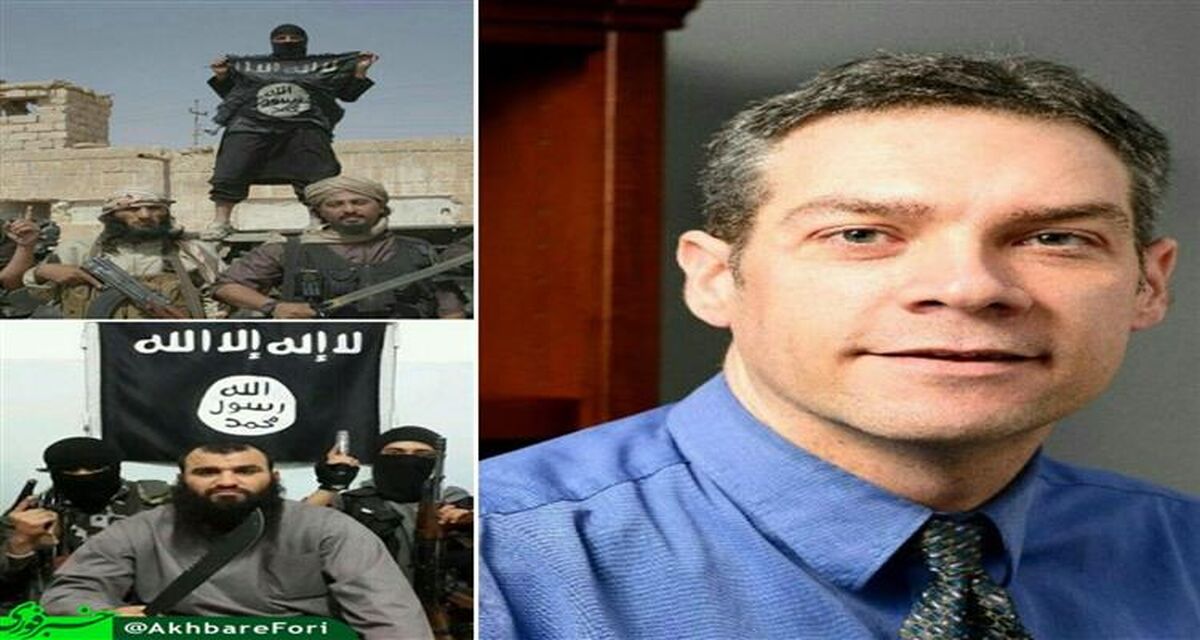
For over three years, ISIS controlled and terrorized large swaths of northern Iraq and Syria. Then, after it was militarily defeated and largely driven out by the Iraqi army and international forces in late 2017, local militias took over short term responsibility for law and order in some of the areas ISIL had relinquished.
Now, many western and Russian experts believe that ISIS' militants are active in the middle east especially in Syria. Based on new researches, Abu Bakr Baghdadi is still alive and is organizing ISIS militants again. They are also active in the north of Africa. They have many militants in Libya, Sinai desert and other northern countries.
Based on these facts, many think that ISIS is rising again in the region and will invade to Syria and Iraq as soon as possible. We have had an interview about this issue with a professor of political science.
Mike Wuthrich is an Assistant Professor in Political Science and the Undergraduate Studies Director for Global & International Studies. His interests are Middle East politics, particularly Turkish, Kurdish politics, parties and party systems, electoral behavior, religion, and nationalism. His publications have appeared in the International Journal of Middle East Studies, the Middle East Journal, Southeast European and Black Sea Studies, and Turkish Studies.
His book, National Elections in Turkey: People, Politics, and the Party System came out in July 2015 with Syracuse University Press.
"I know that ISIS has no conquered region in Syria and Iraq. But, they recently focused on Africa. On the other hand, there are a lot of rumors about Abu Bakr Baghdadi which is alive or dead. My question is about next ISIL's movement. Are they completely disappeared or not, they can return to the power and invade to the African or Asian countries? Which countries and regions are more at risk and danger of ISIL's attack?" we asked.
"Based on what I know and from the ways political scientists would make comparable predictions as scholars, I would guess that ISIL is in a very uncertain transitional period.
I mean that both for members who consider themselves part of the organization and for those of us concerned about their activities." Professor Wuthrich answered.
Professor Wuthrich, then, focused on possible next territory of Isis. He thinks that sub-Saharan country. "The remnants of ISIL are not really territory now, it's just people associated with this organization. They could try to persist in their foolish push for territory to rule over, but they would have to find a place that where the central state is so weak that it can't control significant portions of its territory and where the international community does not concern itself. This is why, as you suggested, a sub-Saharan country or places like Somalia could be possible." He adds.
But professor Wuthrich thinks that ISIS militants do not like Africa, but prefer the middle east. "There are a number of reasons, though, why ISIL members wouldn't like this. Iraq and Syria were great locations for them to recruit outsiders to join and to build up prestige for the Islamic State because it was more appropriate symbolic ground-near to longstanding Islamic capitals like Baghdad and Damascus, and it fit its anti-Shia ideology by occupying areas where Sunni-Shia conflict could be nurtured."
"They would have a hard time recruiting people around the world to join their caliphate if it was set up in Somalia or Niger, or the DRC. Most likely, the ISIL members that have moved to Africa or Asia are doing so to hide, to find safe haven while they figure out how to rebuild." He adds.
Wuthrich believes that for these reasons ISIS solders will join to other Salafi groups. " I think there is a good chance that they give up on the territorial project and some of the members will disappear into the woodwork, join local violent radicals, join Al-Qaeda affiliates, or form a transnational terrorist group."
"Although theoretically, if you are using basic electronic media technology, they could still use their brand name to do damage to people in Europe, the US, or Iran (all the places that ISIL hates), but I actually think that these actions will decrease for a while." He continued.
"They actually don't want much bad attention at this point. They've been nearly wiped out, and so their movements to these other places would have to be seen as a way to make new connections, not to attack, but to hide (and possibly rebuild)." He finished the interview.