
Iran-Oman Joint Hormuz Initiative Directly Challenges US Regional Security Order
The Strait is Within Our Geography
Recent military and economic threats issued by the US President and Treasury Secretary against the Sultanate of Oman reflect a deepening geopolitical rivalry in the Persian Gulf and Washington’s profound frustration over a joint legal initiative by Iran and Oman to cooperatively manage the strategic Strait of Hormuz.
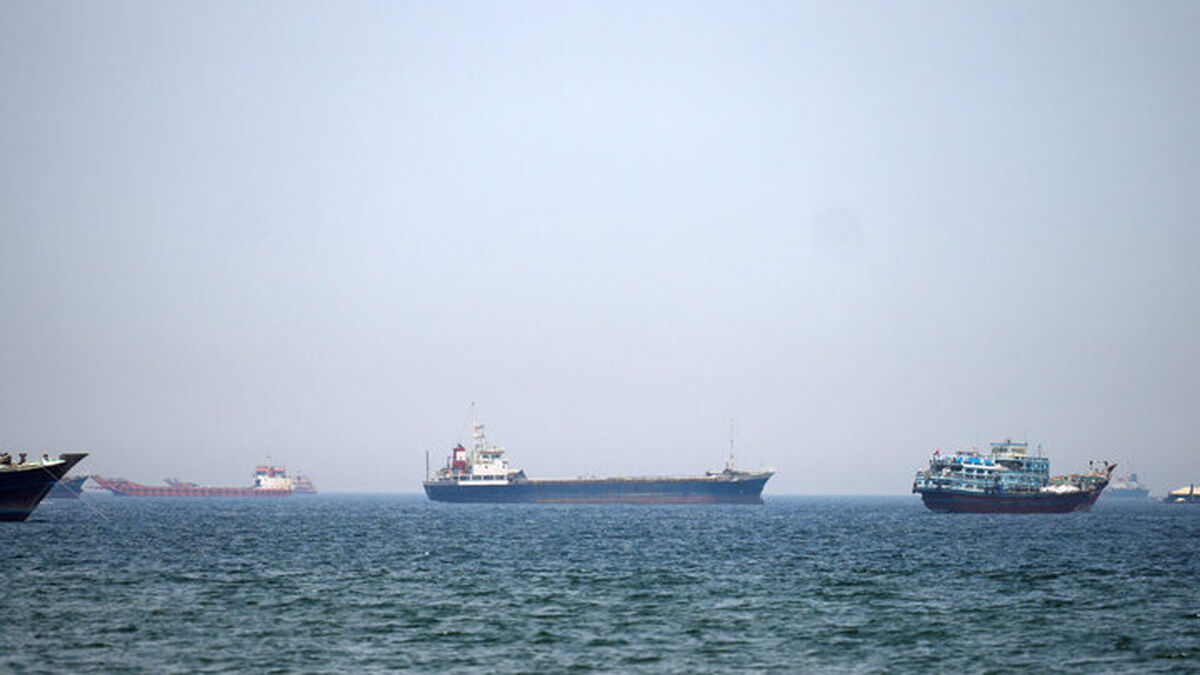
The threatening rhetoric deployed by US President Donald Trump against Oman, arriving as the unilateral Western aggression against Iran approaches its third month, underscores that Washington and its regional allies have failed to achieve their strategic, economic, nuclear, and military objectives regarding Tehran. Instead, regional political and legal dynamics, both on land and within maritime territories, are shifting systematically against American and Israeli strategic interests.
Trump's sharp public condemnation of the Omani monarchy coincided with emerging reports regarding deep consultations between Tehran and Muscat to establish a joint framework for regulating maritime transit and creating a bilateral governance structure over the world’s most vital energy chokepoint. Within this framework, multiple rounds of technical, expert-level, and political negotiations have been convened by deputy foreign ministers and directors from both nations, supplemented by the recruitment of international maritime law experts to solidify the legal architecture of the initiative.
For decades, external powers and certain regional states have sought to maintain security oversight over the Strait of Hormuz under the guise of "preserving freedom of navigation," often exploiting historical maritime disputes. However, the illegal and unilateral military aggression launched by the US and the Israeli regime against Iran rapidly shifted regional paradigms, prompting Tehran and Muscat to prioritize a localized, indigenous security mechanism for the waterway. While this joint initiative quickly materialized through high-level consensus and immediate legal and operational processing, it directly challenges the traditional hegemony exercised by Washington and certain Persian Gulf monarchies over regional waters.
In his initial reaction to the sovereign steps taken by Iran and Oman, Trump asserted that "the strait must be open to everyone," explicitly claiming that the United States military would unilaterally monitor and enforce oversight over the waterway. This stance demonstrates that Washington views any regional arrangement that enhances Iran’s sovereign role in managing the strait as a direct threat to its geopolitical interests. Following Trump's comments, US Treasury Secretary Scott Bessent escalated the pressure by directly threatening Muscat with severe economic sanctions. In a statement published on his social media account, Bessent warned that Washington would not tolerate any efforts by Oman to impose maritime transit duties, tariffs, or a toll-collection framework within the Strait of Hormuz.
What has triggered this intense sensitivity within the White House is not merely political coordination between Tehran and Muscat, but their structured effort to translate this cooperation into a permanent, legally binding executive framework. Western analysts initially miscalculated Oman's resolve, assuming Muscat would not match Iran’s level of commitment. However, Oman's rigorous legal lobbying and operational seriousness revealed absolute alignment with Tehran. Relying on their geographical positions and recognized sovereign rights, Iran and Oman are consolidating the principle that the security and administration of the Strait of Hormuz must be determined exclusively by its littoral states, not by external powers.
From Washington's perspective, this process threatens to dismantle US naval and political influence in the Persian Gulf and alter traditional security arrangements. To deter the formation of this independent regional coalition, the US Treasury Department recently imposed sanctions against an Iranian state entity formally established two weeks ago to manage the strait, warning international corporations and sovereign states that cooperating with this newly minted structure will carry severe legal and financial consequences.
These threats are widely viewed as part of a broader American strategy to constrain Muscat’s historically independent foreign policy. For decades, Oman has carefully maintained its status as a balanced, neutral mediator, refusing to enter aggressive regional political or military blocs. Muscat has consistently sustained balanced relations with Iran, the United States, and regional neighbors, frequently serving as the primary diplomatic backchannel between Tehran and Washington—an strategic independence that now draws fierce American dissatisfaction. While Washington expects its Arab partners to align strictly with its overarching foreign policy doctrines, Oman has repeatedly demonstrated that it will not serve as an instrument for US regional engineering. Muscat’s opposition to military escalation against Iran, its insistence on diplomatic solutions, and its active promotion of regional dialogues underscore the widening strategic divergence between the two capitals.
The escalating crisis also highlights a direct US intervention in the sovereignty of Persian Gulf nations over their own territorial waters. While Iran and Oman maintain that the administration of the waterway must be dictated by littoral rights and bilateral agreements, the United States invokes the generalized concept of an "international waterway" to cement its role as the primary arbiter of regional security, deliberately ignoring the unprovoked military aggression it launched against Iran—a littoral state possessing undisputed sovereign rights over the chokepoint. This approach, analysts note, constitutes an explicit infringement on regional sovereignty designed to keep the Middle East’s security architecture entirely dependent on US military deployment.
Furthermore, hidden pressure from certain Persian Gulf principalities, particularly the United Arab Emirates, has heavily influenced Washington’s aggressive posture. For decades, Abu Dhabi has leveraged US and European backing to advance baseline claims over three strategic Iranian islands. From the perspective of these states, the formal, legally binding consolidation of Iranian sovereignty over the Strait of Hormuz effectively brings a definitive end to their manufactured territorial claims.
Despite Oman's long-standing status as one of Washington’s oldest partners in the region, the United States has resorted to intimidation and coercion to force a strategic retreat by Muscat—a shift that has sparked widespread surprise and intense criticism among both American and Omani political elites. Omani intellectuals and scholars have roundly condemned Trump’s remarks as a glaring manifestation of American hegemony and an unvarnished intervention in their national sovereignty.
Hatem Al-Taie, the Editor-in-Chief of Oman's Al-Rooya newspaper, described Trump's threats as a symptom of failed US regional policies, noting that Washington’s anger stems from Muscat’s absolute refusal to submit to forced normalization with the Israeli regime or align with hostile American geopolitical designs. Similarly, Omani political analyst and academic Ali bin Masoud Al-Maashani emphasized that interventionist US policies remain the primary driver of regional instability, accusing Washington of attempting to choke off independent diplomatic paths by threatening Oman.
Omani researcher Saif Al-Maamari characterized Trump’s statements as an orchestrated campaign to erode Oman’s historic diplomatic standing, pointing out that Western-aligned media apparatuses are actively attempting to delegitimize Muscat’s balanced posture. Political analyst Mohammad Said Al-Futaisi reaffirmed that Oman is not a client state to be governed by the language of threats, noting its foreign policy remains rooted in absolute independence, dialogue, and national sovereignty. Abdullah Baabood, a prominent professor of international relations, characterized Trump's stance as dangerous and entirely outside standard diplomatic norms, reaffirming that Oman will remain steadfast in its adherence to active neutrality, constructive mediation, and a principled opposition to warfare.
The collective domestic backlash within Oman demonstrates that its political community views Washington’s behavior as a direct assault on its national dignity. Experts agree that Muscat will not abandon its independent foreign policy or its diplomatic mediation under American duress. The confrontation reveals that the White House remains deeply unwilling to accept local geopolitical control over the Strait of Hormuz, opting to publicly intervene to safeguard its security dominance. However, this coercive approach is facing mounting, organized resistance from regional actors, led decisively by Iran and Oman. The Sultanate’s formal invitation to Iranian Foreign Minister Seyed Abbas Araghchi amid ongoing regional hostilities, coupled with its explicit backing of the joint maritime control initiative, serves as a powerful reassertion of Muscat's sovereign defiance against transregional bullying.